

How to Shoot Dialogue Scenes Inside a Car Without Fighting Traffic
Filming dialogue scenes inside moving cars creates major challenges for lighting, sound, continuity, and performance. Here’s why more productions are turning to controlled driving scene workflows in Los Angeles.
Productions spend an incredible amount of time trying to make driving scenes feel effortless.
But filming dialogue scenes inside a moving car is one of the most technically difficult things you can shoot.
Not because of the camera.
Because of everything else.
Traffic changes. Lighting changes. Background continuity changes. Audio changes. Reflections change. Suddenly a simple two-person conversation becomes a rolling production problem that affects nearly every department at once.
That’s why many productions eventually discover the same thing:
The hardest part of filming inside a car usually isn’t the driving.
It’s maintaining consistency.
The Reality of Shooting Dialogue in Moving Vehicles
When people imagine filming car scenes, they usually picture action work, stunt driving, or complicated rigs.
In reality, many productions struggle more with basic interior dialogue coverage.
A simple scene with two actors talking while driving through Los Angeles can quickly create problems like:
inconsistent sunlight between takes
traffic interruptions
changing reflections on windows
engine and road noise
continuity resets
unpredictable background vehicles
limited camera positions
actor concentration issues
permit and safety complications
Even a short page of dialogue can take far longer than expected once real-world driving conditions start affecting the scene.
And unlike many production problems, these issues compound together.
If traffic changes, timing changes.
If timing changes, lighting changes.
If lighting changes, continuity changes.
Now editorial has to work harder to hide the differences between shots that were supposed to cut seamlessly together.
Why Consistency Matters More Than Real Motion
Most audiences don’t actually judge driving scenes based on whether the vehicle was physically moving at highway speed.
They judge whether the scene feels believable.
That believability usually comes from:
stable lighting
realistic reflections
controlled backgrounds
natural actor performances
smooth editorial continuity
Ironically, productions often lose those qualities when they try to capture everything practically on real roads.
Real driving introduces variables that are difficult to repeat.
And repeatability is one of the most valuable things a production can have.
Especially for dialogue-heavy scenes.
Why Many Productions Avoid “Real Driving” for Interior Coverage
A surprising number of film and commercial productions separate exterior driving from interior performance work.
Exterior shots may still be captured on real roads, process trailers, or controlled locations.
But interior dialogue coverage is often approached differently.
Why?
Because once the camera moves inside the vehicle, production priorities shift toward:
actor performance
sound quality
lighting control
shot repeatability
editorial continuity
schedule efficiency
The audience mainly focuses on the people inside the car.
That means productions benefit more from consistency than uncontrolled realism.
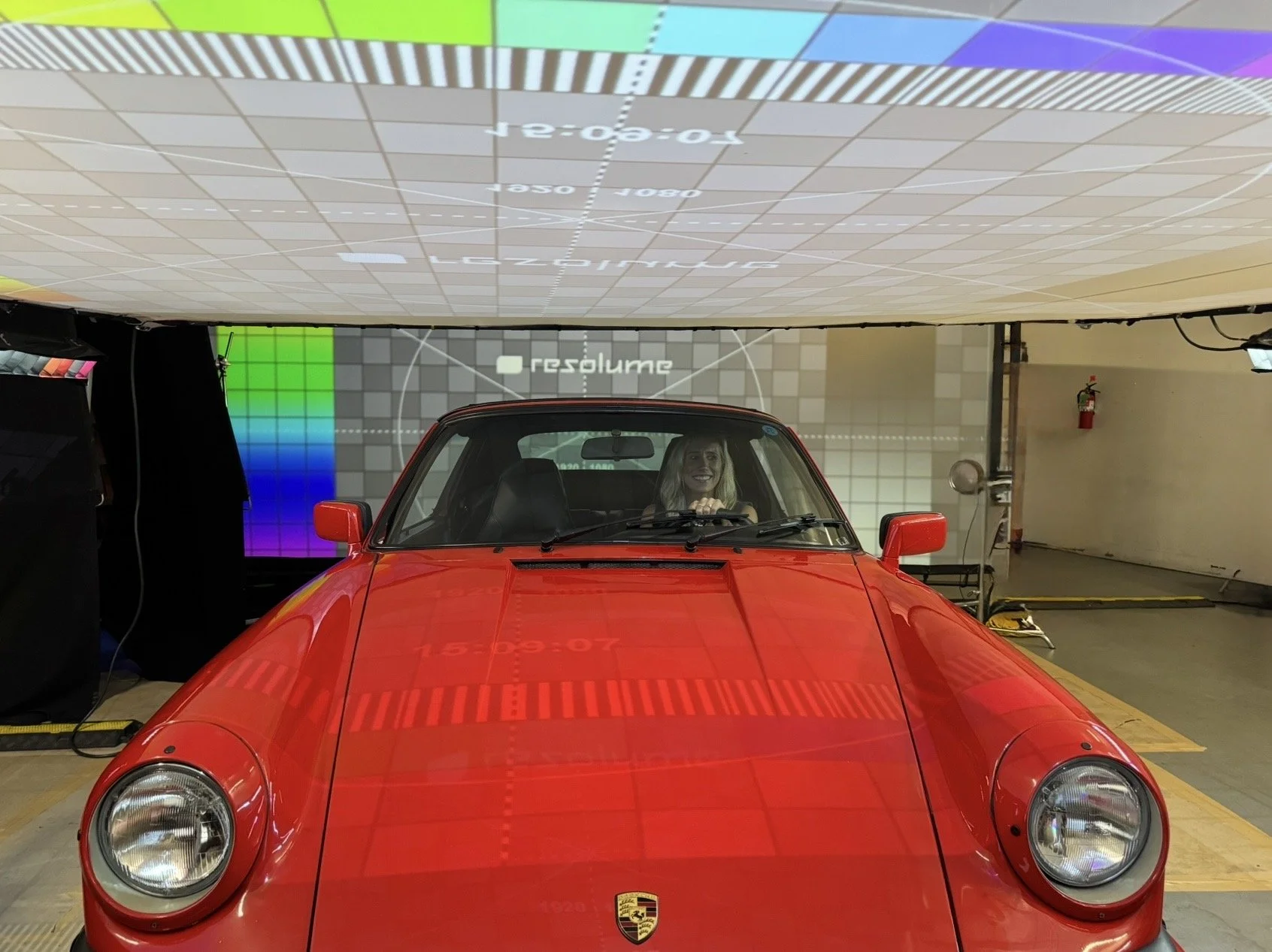
Many filmmakers exploring rear projection driving workflows are ultimately trying to solve these exact production problems.
The Problem With Chasing Perfect Reality
One of the biggest misconceptions in filmmaking is that “real” automatically looks more realistic on camera.
It doesn’t.
Real roads create:
random lighting fluctuations
uncontrolled reflections
inconsistent traffic patterns
unpredictable timing
difficult resets
Meanwhile, controlled environments allow filmmakers to shape the illusion more carefully.
The goal isn’t documenting reality.
The goal is creating believable cinematic continuity.
Those are not always the same thing.
Why Controlled Car Scene Workflows Are Becoming More Popular
As productions become more schedule-sensitive, many filmmakers are looking for ways to simplify car scene production without sacrificing realism.
That’s one reason controlled driving scene workflows have become increasingly attractive for:
commercials
narrative dialogue scenes
music videos
branded content
indie films
pickup shots
insert work
celebrity or talent-heavy productions
Instead of fighting traffic and environmental inconsistency all day, productions can focus on performance, cinematography, and coverage.
For directors and cinematographers, that often means:
repeatable lighting
easier continuity
more camera flexibility
quieter environments
more efficient resets
fewer exterior variables
And for producers, it can mean something equally important:
Predictability.
Productions researching options for filming car scenes in Los Angeles are often searching for exactly this kind of control.
Performance Changes When Actors Don’t Have To Survive Traffic
One thing productions rarely discuss enough is how much actor performance changes inside controlled environments.
Driving while performing dialogue is cognitively demanding.
Even on process trailers, actors still deal with:
environmental distractions
vehicle movement
weather
external noise
safety awareness
timing inconsistencies
Controlled driving scene environments reduce many of those distractions.
That allows actors to focus more fully on pacing, emotional timing, and interaction.
And audiences notice performance before they notice technical methodology.
The Goal Was Never “Fake”
There’s a common misconception that controlled driving scene techniques are about creating something artificial.
In reality, the goal is usually the opposite.
The goal is removing distractions that break cinematic realism.
When productions gain control over:
lighting
reflections
timing
continuity
sound
performance conditions
…the final scene often feels more immersive, not less.
Because filmmaking has always been about controlled illusion.
Not uncontrolled reality.
Modern Driving Scenes Are About Control
Whether a production uses process trailers, LED walls, rear projection, plates, controlled stages, or hybrid workflows, the industry keeps moving toward the same core idea:
Control creates consistency.
And consistency creates believable storytelling.
Especially inside a car.
Interested in exploring controlled driving scene workflows? Visit RearProjectionDriving.com to learn more.
Why Most Driving Scenes Are Shot the Hardest Way Possible
Most driving scenes are harder than they need to be. Interior car scenes often default to process trailers or green screen, creating unnecessary complexity, continuity problems, and performance limitations.
Most driving scenes are not complicated.
They just get treated that way.
A director needs a performance.
A DP needs consistency.
A producer needs the day to move.
Somewhere between those three goals, productions choose the most difficult option available and then spend the rest of the shoot trying to control it.
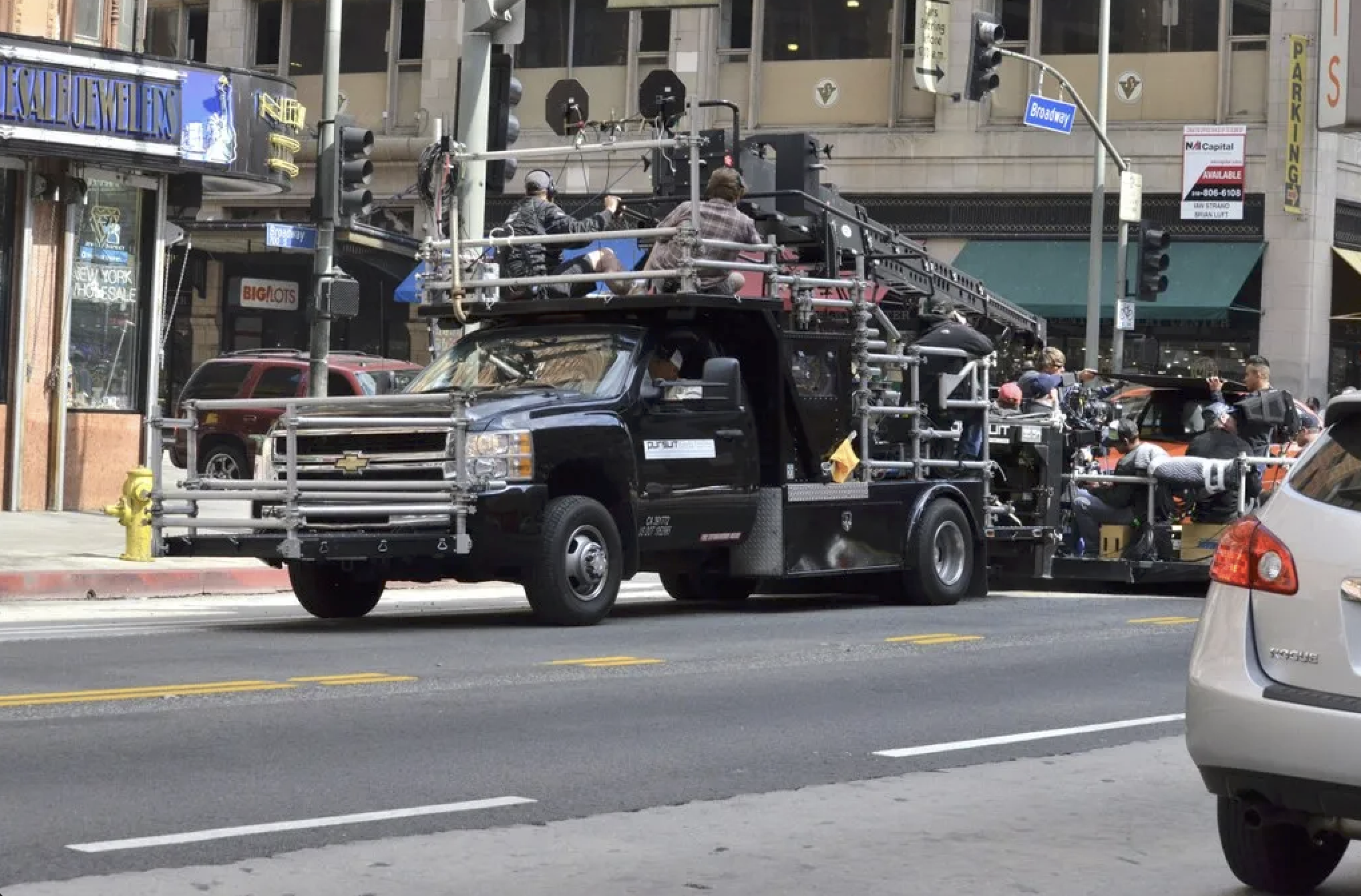
This happens most often with interior car scenes, where productions default to process trailers or green screen even when neither is the best fit.
The default choices
For interior driving scenes, productions usually fall into two camps.
Put the car on the road and figure it out.
Or put the car on a green screen and fix it later.
Both approaches can work.
Both are also responsible for a lot of scenes that never quite land.
On the road, the environment takes over.
Light changes constantly.
Sound becomes a problem.
Continuity slips.
Resets take longer than expected.
Performances flatten because the actor is reacting to traffic instead of the scene.
On green screen, the opposite happens.
Everything is controlled, but nothing feels connected.
The light does not behave the way the background does.
Reflections stop making sense.
Actors lose their relationship to the world outside the windows.
The scene becomes technically correct and emotionally thin.
Most productions accept these tradeoffs because they assume there is no middle ground.
Rear projection driving exists in that middle ground, even though many crews forget it does.
The real problem is not realism
A lot of conversations about driving scenes get stuck on realism.
How real does it look.
How convincing is the motion.
That is not where most scenes succeed or fail.
What breaks a driving scene is inconsistency.
Light that does not match shot to shot.
Reflections that change direction between angles.
Background motion that does not line up with performance.
Actors reacting to something that is not there.
Audiences will accept exaggeration.
They will not accept behavior that feels wrong.
This is why so many driving scenes feel off even when the budget is high.
The tools were chosen based on logistics, not behavior.
Why productions make it harder than it needs to be
Process trailers are powerful, but they introduce variables that are hard to tame.
Green screen is flexible, but it demands precision that often gets deferred until post.
In both cases, the production spends energy compensating for the method instead of serving the scene.
Time gets burned waiting for conditions to cooperate, or resetting coverage that never quite matches.
Coverage gets compromised to stay on schedule.
Post becomes responsible for fixing problems that were baked in on set.
None of this is controversial.
Everyone has experienced it.
What is surprising is how rarely productions stop and ask whether the difficulty is necessary.
Interior driving scenes are not exterior stunts
Most interior car scenes are about people, not motion.
Dialogue.
Tension.
Eye lines.
Micro reactions.
The world outside the car matters only insofar as it supports those things.
When the environment becomes the dominant force, the scene often suffers.
Not because the environment is wrong, but because it is uncontrolled.
This is where rear projection gets misunderstood.
It is not a visual trick.
It is a workflow choice.
Control is the point
Rear projection exists for one reason.
To make the environment behave.
That includes realism.
It also includes repeatability.
It includes lighting that responds correctly to the image.
It includes reflections that make sense across angles.
It includes actors who can actually see the world they are reacting to.
That is why it is often used as an alternative to process trailers or green screen for interior driving scenes.
None of that requires the scene to be slow or subtle.
Fast insert shots still benefit from consistency.
Montage sequences still benefit from continuity.
Chaotic moments still need the light and motion to agree with each other.
Control does not remove energy.
It removes accidents.
Why this gets overlooked
Rear projection has a reputation problem.
People associate it with older techniques or assume it is limiting.
In practice, most limitations come from trying to force other methods to behave.
On the road, the crew fights physics.
On green screen, the crew fights separation.
Rear projection solves a different problem.
It aligns the image with the performance at the moment it is captured.
That is why it quietly replaces more complicated solutions when the goal is a believable interior scene.
This is not about using one tool everywhere
No single method is correct for every shot.
Exterior chase work belongs on the road.
Shots that depend on genuine unpredictability should stay real.
Moments where the camera is discovering the world benefit from being in it.
Interior scenes where performance carries the weight are a different category.
Those scenes do not need danger.
They need precision.
The mistake is treating all driving scenes as if they have the same requirements.
The harder way is often the familiar way
Most productions do not choose difficult solutions because they want to.
They choose them because they are familiar.
They know how to schedule them.
They know how to explain them.
They know what problems to expect, even if those problems are costly.
Rear projection challenges that familiarity.
It asks a simple question.
What if the environment worked with you instead of against you.
For interior driving scenes, that question changes everything.
The practical takeaway
If a scene lives or dies on performance.
If continuity matters.
If time on set is precious.
If realism needs to hold up under scrutiny.
There is no reason to choose the hardest path by default.
Rear projection is not a novelty.
It is not a compromise.
It is a practical alternative that solves problems productions have learned to tolerate.
And once you stop tolerating them, it becomes hard to justify doing it the old way.
For productions looking for a controlled, in-camera alternative to process trailers and green screen, rear projection driving is what this stage was built for.
Learn more at rearprojectiondriving.com
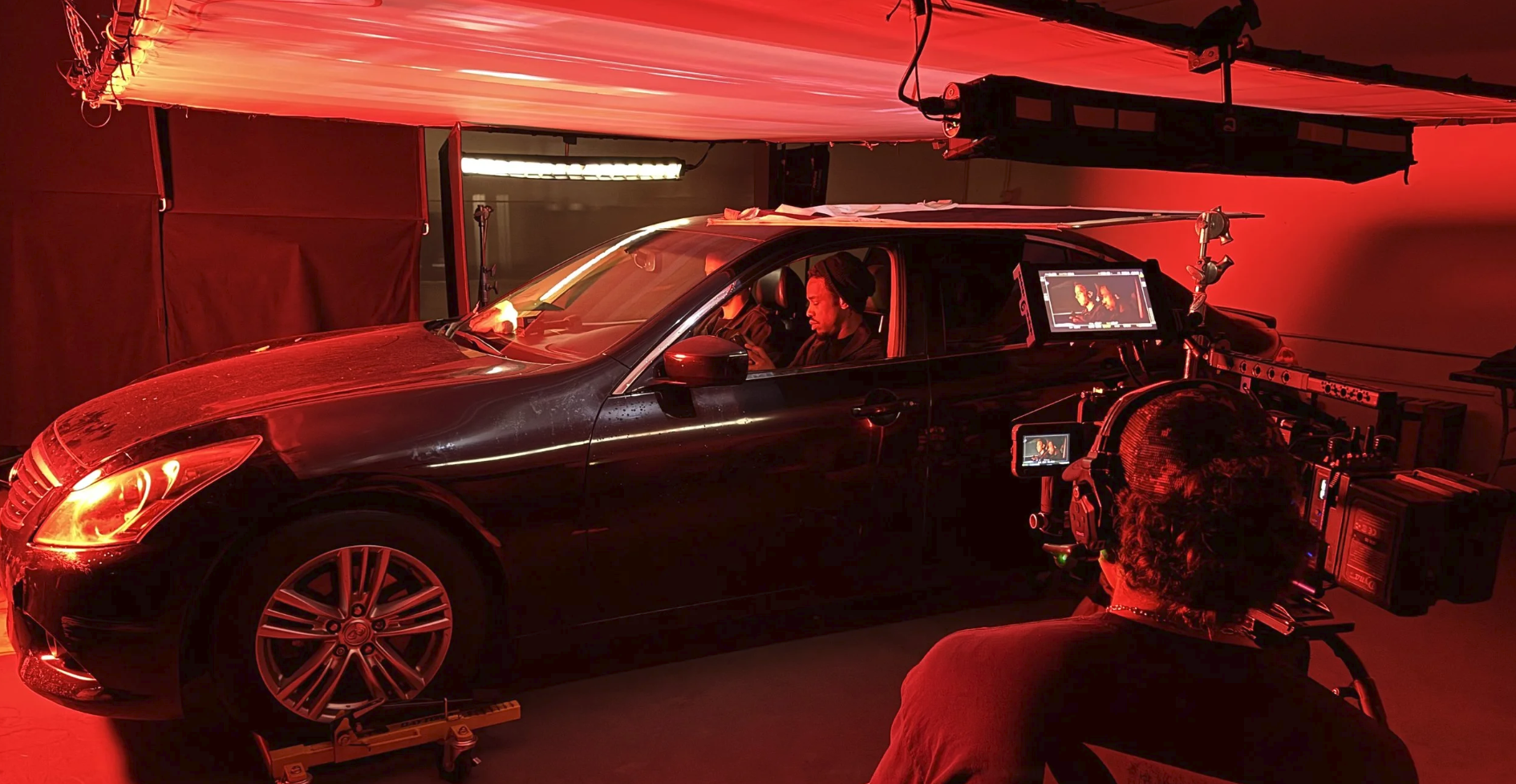
How Image-Based Lighting Upgraded Our Rear Projection Workflow
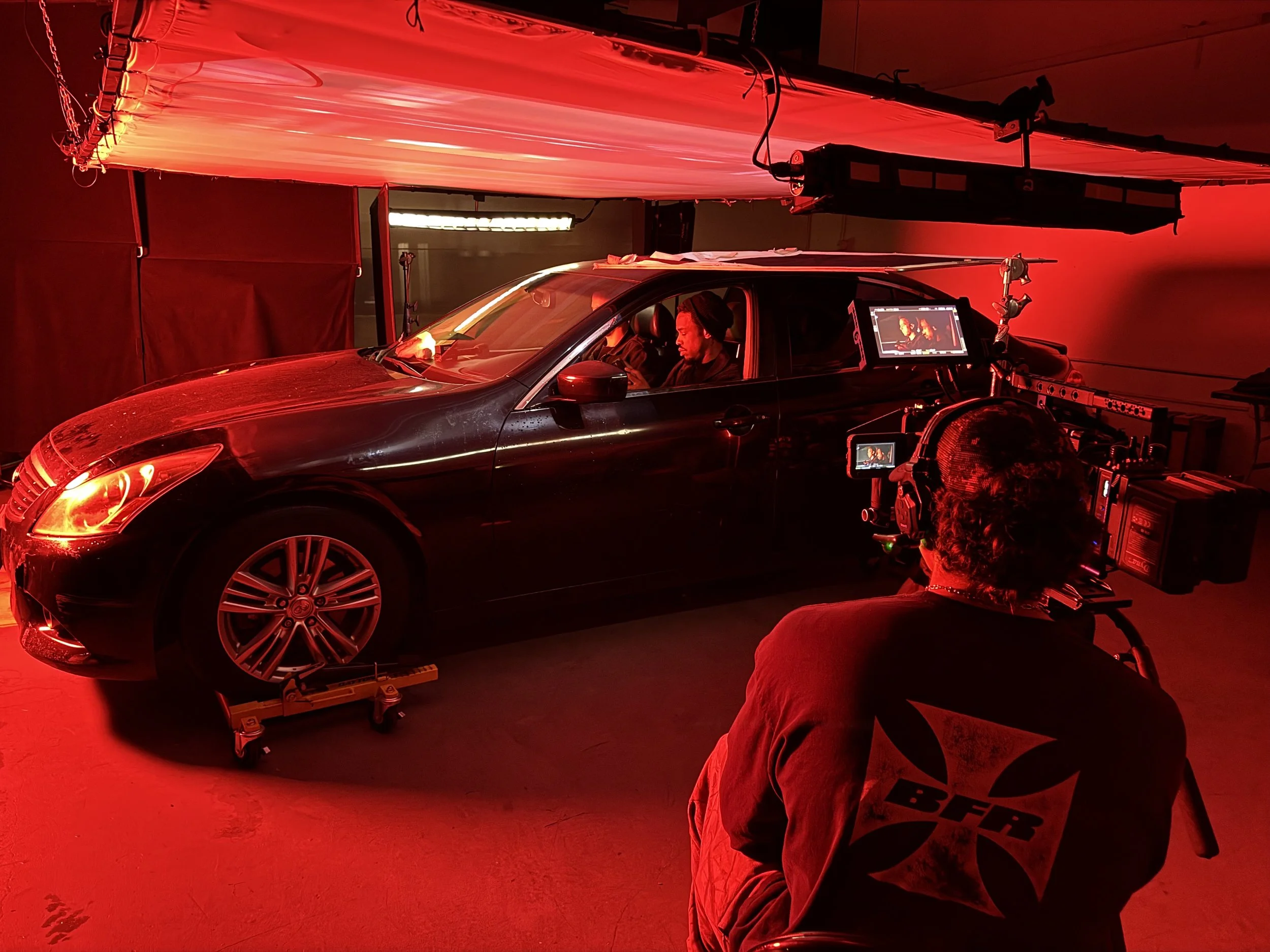
In Camera Realism Perfected
At Rear Projection Driving™ in North Hollywood, our goal has always been simple: make virtual driving scenes feel completely real. Our newest upgrade brings us closer than ever. The stage now runs a full image based lighting system using Quasar Science Double Rainbow tubes all connected over Ethernet.
Every light on the car set now reacts directly to the projection plate. The color, brightness, and direction of light match the background perfectly. When the road plate shifts from bright daytime to evening cityscape, the Quasars follow frame by frame. Actors are lit by the same world they see on screen, and cinematographers get natural reflections with exact color fidelity straight out of camera.
Why Image Based Lighting Changes Everything
Until now, filmmakers often relied on “gag” lighting to fake motion. They would chase lights across dimmers or flicker gels to simulate passing traffic. Those tricks took time, were rarely accurate, and often broke continuity between takes.
With our new image based system, that process is gone. The lighting data comes directly from the projection feed itself. Each change in the driving plate translates instantly into moving color across the Quasar tubes. Headlights sweep across dashboards, city lights glide through windows, and every reflection reacts in real time.
For cinematographers, it means:
True color matching between projection and practical light
Consistent, realistic reflections on metal and glass
No more guessing exposure or faking motion
Technical Simplicity Behind the Scenes
The rig runs across 4 DMX universes, combining a steady base fill with dynamic chase data from the plate.
Base Fill: daylight at about 5600 K or tungsten at about 3200 K to provide balanced soft light.
Chase Layer: driven through a second computer system mirroring the motion and tone of the projected image.
Network Control: all fixtures connected by Ethernet for zero lag and exact repeatability.
This setup replaces every old manual chase or gag light. What you see in camera is exactly what the background dictates, take after take.
A Better Experience for Everyone on Set
Directors and DPs gain real control and visual accuracy. Producers save time and reduce the number of lighting resets between takes. Clients see final-looking results right out of camera.
The upgrade makes Rear Projection Driving™ one of Los Angeles’s most practical environments for in-camera VFX, commercials, and narrative projects that need believable light and motion without LED wall costs or heavy post work.
Book a Tour or Test
Visit RearProjectionDriving.com or call 213-794-6796 to schedule a walkthrough.
Skip the green screen. Skip the gag lights. Experience true image based lighting that moves with the story, only at Rear Projection Driving™ in Los Angeles.