

How to Shoot Dialogue Scenes Inside a Car Without Fighting Traffic
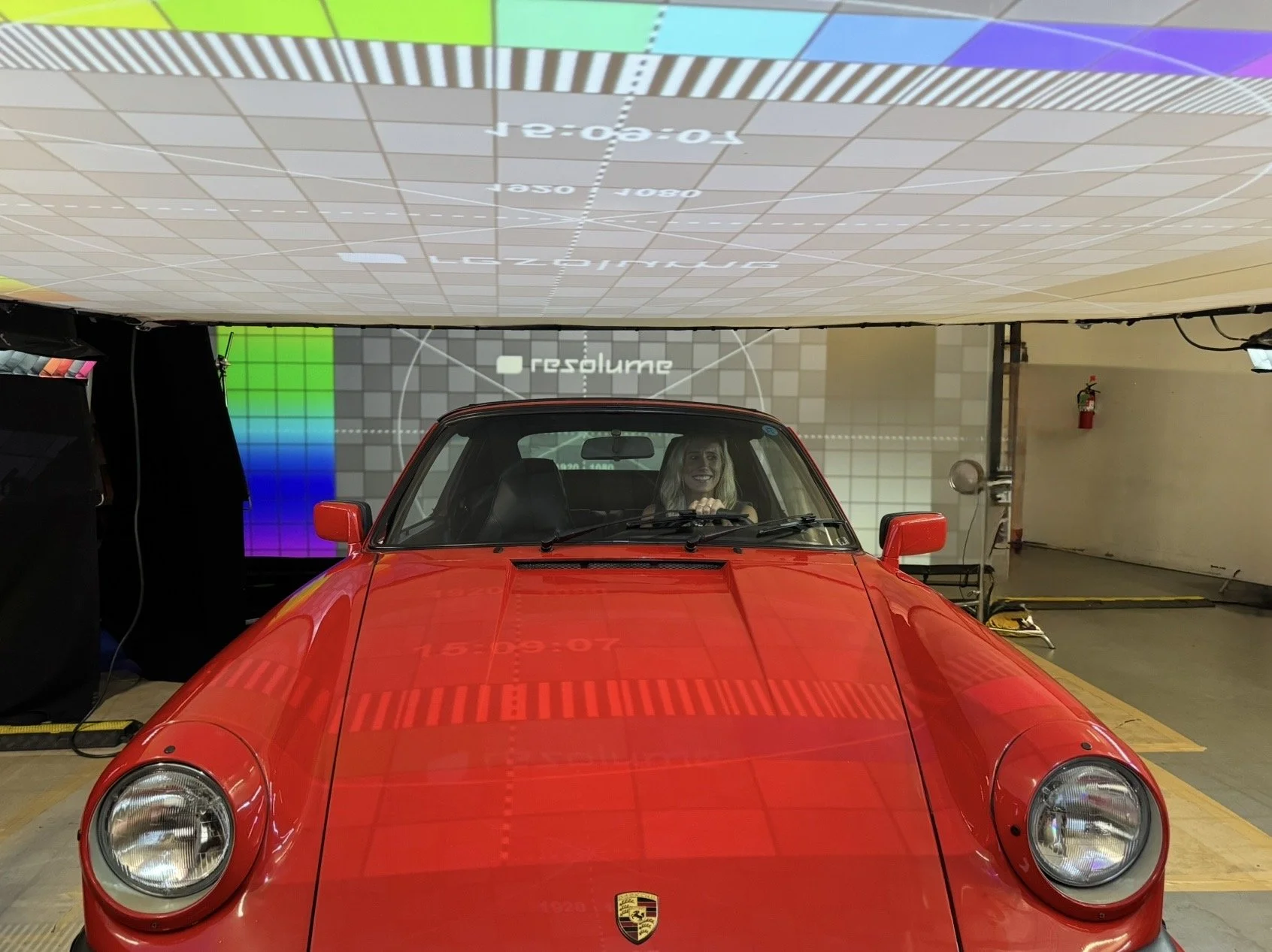
Productions spend an incredible amount of time trying to make driving scenes feel effortless.
But filming dialogue scenes inside a moving car is one of the most technically difficult things you can shoot.
Not because of the camera.
Because of everything else.
Traffic changes. Lighting changes. Background continuity changes. Audio changes. Reflections change. Suddenly a simple two-person conversation becomes a rolling production problem that affects nearly every department at once.
That’s why many productions eventually discover the same thing:
The hardest part of filming inside a car usually isn’t the driving.
It’s maintaining consistency.
The Reality of Shooting Dialogue in Moving Vehicles
When people imagine filming car scenes, they usually picture action work, stunt driving, or complicated rigs.
In reality, many productions struggle more with basic interior dialogue coverage.
A simple scene with two actors talking while driving through Los Angeles can quickly create problems like:
inconsistent sunlight between takes
traffic interruptions
changing reflections on windows
engine and road noise
continuity resets
unpredictable background vehicles
limited camera positions
actor concentration issues
permit and safety complications
Even a short page of dialogue can take far longer than expected once real-world driving conditions start affecting the scene.
And unlike many production problems, these issues compound together.
If traffic changes, timing changes.
If timing changes, lighting changes.
If lighting changes, continuity changes.
Now editorial has to work harder to hide the differences between shots that were supposed to cut seamlessly together.
Why Consistency Matters More Than Real Motion
Most audiences don’t actually judge driving scenes based on whether the vehicle was physically moving at highway speed.
They judge whether the scene feels believable.
That believability usually comes from:
stable lighting
realistic reflections
controlled backgrounds
natural actor performances
smooth editorial continuity
Ironically, productions often lose those qualities when they try to capture everything practically on real roads.
Real driving introduces variables that are difficult to repeat.
And repeatability is one of the most valuable things a production can have.
Especially for dialogue-heavy scenes.
Why Many Productions Avoid “Real Driving” for Interior Coverage
A surprising number of film and commercial productions separate exterior driving from interior performance work.
Exterior shots may still be captured on real roads, process trailers, or controlled locations.
But interior dialogue coverage is often approached differently.
Why?
Because once the camera moves inside the vehicle, production priorities shift toward:
actor performance
sound quality
lighting control
shot repeatability
editorial continuity
schedule efficiency
The audience mainly focuses on the people inside the car.
That means productions benefit more from consistency than uncontrolled realism.
Many filmmakers exploring rear projection driving workflows are ultimately trying to solve these exact production problems.
The Problem With Chasing Perfect Reality
One of the biggest misconceptions in filmmaking is that “real” automatically looks more realistic on camera.
It doesn’t.
Real roads create:
random lighting fluctuations
uncontrolled reflections
inconsistent traffic patterns
unpredictable timing
difficult resets
Meanwhile, controlled environments allow filmmakers to shape the illusion more carefully.
The goal isn’t documenting reality.
The goal is creating believable cinematic continuity.
Those are not always the same thing.
Why Controlled Car Scene Workflows Are Becoming More Popular
As productions become more schedule-sensitive, many filmmakers are looking for ways to simplify car scene production without sacrificing realism.
That’s one reason controlled driving scene workflows have become increasingly attractive for:
commercials
narrative dialogue scenes
music videos
branded content
indie films
pickup shots
insert work
celebrity or talent-heavy productions
Instead of fighting traffic and environmental inconsistency all day, productions can focus on performance, cinematography, and coverage.
For directors and cinematographers, that often means:
repeatable lighting
easier continuity
more camera flexibility
quieter environments
more efficient resets
fewer exterior variables
And for producers, it can mean something equally important:
Predictability.
Productions researching options for filming car scenes in Los Angeles are often searching for exactly this kind of control.
Performance Changes When Actors Don’t Have To Survive Traffic
One thing productions rarely discuss enough is how much actor performance changes inside controlled environments.
Driving while performing dialogue is cognitively demanding.
Even on process trailers, actors still deal with:
environmental distractions
vehicle movement
weather
external noise
safety awareness
timing inconsistencies
Controlled driving scene environments reduce many of those distractions.
That allows actors to focus more fully on pacing, emotional timing, and interaction.
And audiences notice performance before they notice technical methodology.
The Goal Was Never “Fake”
There’s a common misconception that controlled driving scene techniques are about creating something artificial.
In reality, the goal is usually the opposite.
The goal is removing distractions that break cinematic realism.
When productions gain control over:
lighting
reflections
timing
continuity
sound
performance conditions
…the final scene often feels more immersive, not less.
Because filmmaking has always been about controlled illusion.
Not uncontrolled reality.
Modern Driving Scenes Are About Control
Whether a production uses process trailers, LED walls, rear projection, plates, controlled stages, or hybrid workflows, the industry keeps moving toward the same core idea:
Control creates consistency.
And consistency creates believable storytelling.
Especially inside a car.
Interested in exploring controlled driving scene workflows? Visit RearProjectionDriving.com to learn more.